Website Mistakes That Cost Enrolments

bdd

Feb 18, 2026
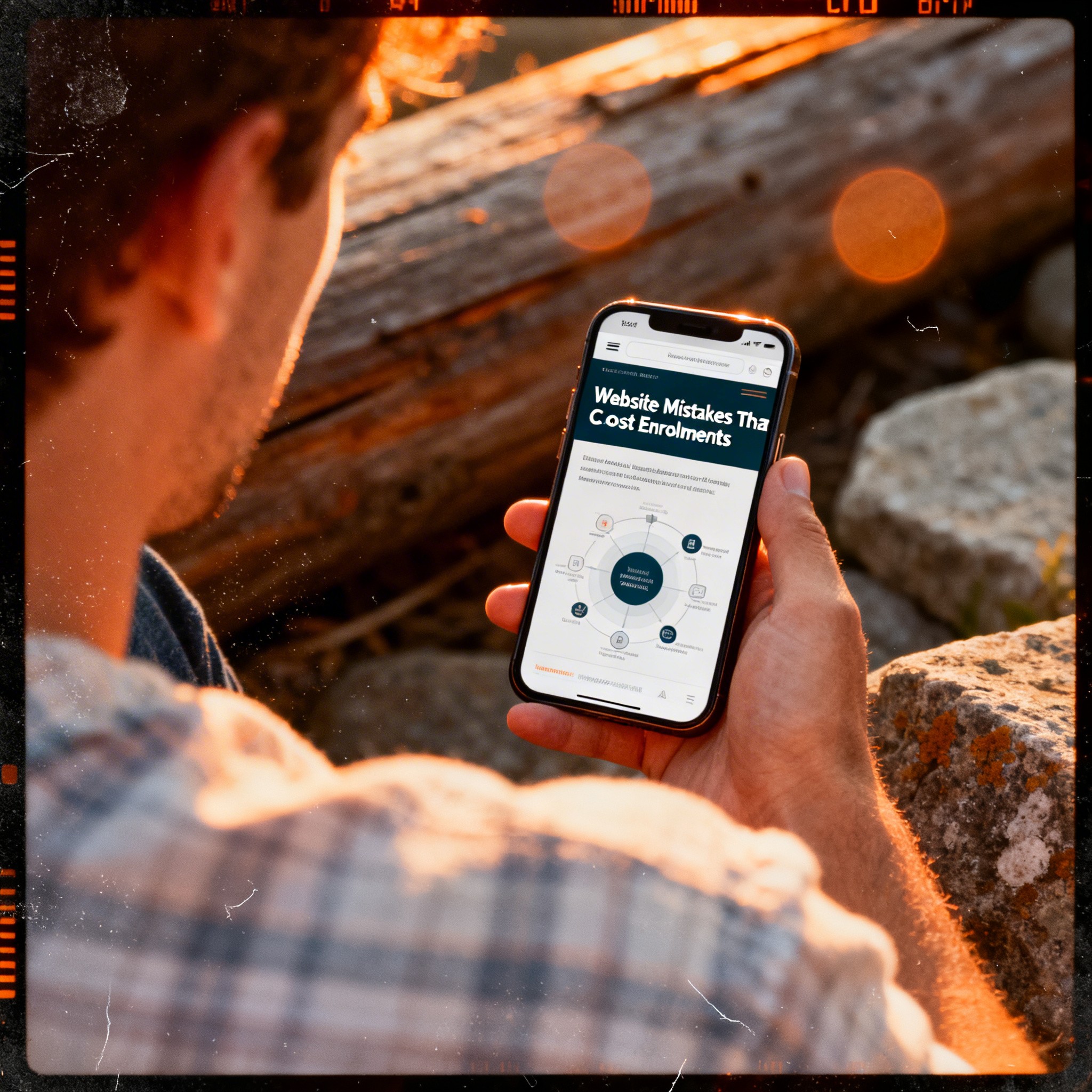
Website Mistakes That Cost Enrolments
Why Many Education Websites in Singapore Lose Parents Before They Enquire
In 2026, most parents discover enrichment classes, holiday camps and kids’ programs online first.
Your website is often the first serious interaction a parent has with your brand.
Yet many education businesses in Singapore unknowingly lose enrolments at this stage — not because their programs are weak, but because their website creates friction, confusion or doubt.
Here are the most common website mistakes that reduce enquiries and bookings.
1. Too Many Programs on One Page
Many centres place all classes, ages and themes on one long page.
To parents, this feels overwhelming.
Instead of clarity, they experience cognitive load:
Too many options
No clear starting point
Difficulty finding the right fit
Parents don’t want to study your website.
They want to quickly see: “Is this right for my child?”
What works better:
One clear program or age group per page, with simple navigation.
2. No Immediate Clarity on Age, Location or Schedule
Parents scan quickly — often on mobile.
If they can’t immediately see:
age range
location
dates or frequency
they leave.
Many websites hide this information inside paragraphs or PDFs.
In reality, these are the first decision filters.
What works:
Display age, location and schedule at the top of the page.
3. Weak or Missing Call-to-Action
A surprising number of education websites don’t clearly tell parents what to do next.
Common issues:
“Learn more” buttons only
No enquiry option above the fold
CTA only at bottom of page
Parents should never wonder how to proceed.
What works:
Clear, repeated CTAs such as:
Book trial
Check availability
WhatsApp us
4. Slow or Mobile-Unfriendly Experience
Over 80% of parents in Singapore browse on mobile.
Yet many enrichment websites are designed primarily for desktop.
Deal-breakers include:
slow loading
tiny text
crowded layout
difficult forms
If understanding your offer takes more than 10–15 seconds, parents leave.
What works:
Mobile-first design with fast loading and simple sections.
5. Long or Complicated Enquiry Forms
Many centres ask for too much information too early:
child details
medical notes
schedule preferences
full contact data
This creates friction before trust is built.
Parents prefer quick, low-effort contact first.
What works:
Short forms or WhatsApp entry, with details collected later.
6. Lack of Trust Signals
Parents evaluate credibility quickly.
Websites that lack reassurance reduce enquiries.
Common missing elements:
real class photos
teacher information
safety or ratios
reviews
Without these, parents feel uncertainty — and hesitate.
What works:
Visible trust signals above the fold:
reviews
years of experience
real images
qualifications
7. Sending Traffic to the Homepage Instead of Program Pages
Many ads and social links lead to the homepage.
But homepages are general — parents clicked for something specific.
This mismatch creates confusion and drop-off.
What works:
Direct traffic to the exact program or camp page.
8. Educational Language Instead of Parent Language
Some websites describe pedagogy, philosophy or curriculum in complex terms.
Parents are not evaluating academic theory.
They are asking:
Will my child enjoy this?
Is this safe?
Is this worth it?
What works:
Clear, parent-focused benefits and outcomes.
9. No Clear Daily or Session Structure
Especially for camps and multi-activity programs, parents want to understand the experience.
When structure is vague, uncertainty rises.
What works:
Simple breakdown:
activities
timing
supervision
flow
Structure reduces perceived risk.
10. Lack of Urgency or Availability Signals
Parents compare multiple options.
If your website feels unlimited and passive, they delay.
What works:
limited slots
upcoming start dates
next intake
availability indicators
These reduce hesitation.
Final Thoughts
Most education websites don’t lose parents because of price or program quality.
They lose them because clarity and trust are missing in the first 15 seconds.
In Singapore’s competitive education market, the websites that convert best are:
simple
mobile-clear
trust-rich
action-oriented
When parents quickly understand your offer and feel confident, enquiries follow naturally.
Kate M